
TREATMENTS
Pediatric Dentistry
Protect your child's oral health early with pediatric dentistry. What is it, when should the first visit be, and which preventive treatments are used?
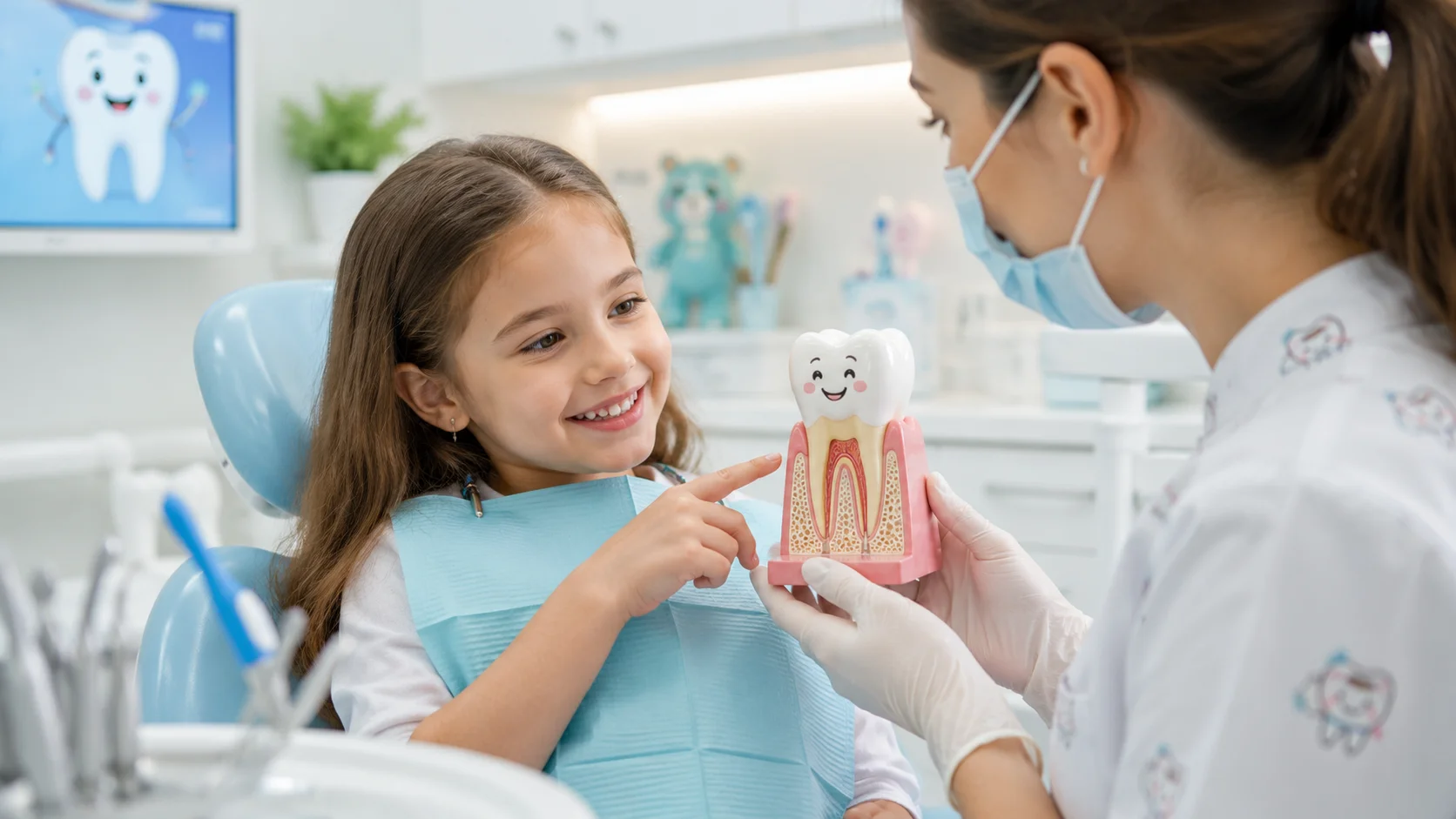
A child's oral health plays an important role not only in protecting the teeth that are present today, but also in chewing, speech development, jaw growth, the eruption of permanent teeth and the formation of healthy oral-care habits. Pediatric dentistry focuses on the oral and dental needs of babies, children and adolescents, combining prevention, early diagnosis and treatment when necessary.
At Medilife Dent Oral and Dental Health Polyclinic, dental visits for children are planned according to age, stage of development, oral health needs and previous dental experiences. The aim is not simply to treat an existing cavity or painful tooth. A good pediatric dental approach also helps children become familiar with the dental environment and supports habits that can protect their oral health as they grow.
At our clinic in Beylikdüzü, a child's primary teeth, erupting permanent teeth, gums, oral hygiene, jaw development and bite relationship can be assessed together. Preventive applications, restorative treatment or further monitoring can then be planned according to the individual findings.
What Is Pediatric Dentistry?
Pediatric dentistry is the branch of dentistry concerned with the oral health of infants, children and adolescents. It includes much more than the treatment of tooth decay.
A pediatric dental care plan may involve:
- Preventive dental examinations
- Monitoring tooth eruption
- Oral-hygiene guidance
- Dietary advice related to dental health
- Fluoride applications when appropriate
- Fissure sealants
- Treatment of dental caries
- Management of dental trauma
- Assessment of early tooth loss
- Monitoring jaw and bite development
Children are not simply smaller versions of adult patients. The anatomy of primary teeth, the speed at which decay can progress, the child's ability to cooperate and the developmental stage all influence treatment planning.
Why Are Baby Teeth Important?
Primary, or baby, teeth eventually fall out, but they still perform important functions for several years.
Baby teeth help children:
- Chew food comfortably
- Develop clear speech
- Maintain space for permanent teeth
- Support normal jaw development
- Maintain the appearance of the smile
- Develop normal oral function
If a primary tooth is lost too early, neighbouring teeth may begin to move into the empty space. This can reduce the room available for the permanent tooth developing underneath.
For this reason, decay or infection in a baby tooth should not automatically be ignored simply because the tooth will eventually be replaced.
When Should a Child Have Their First Dental Visit?
A child's first dental visit does not need to wait until pain or a visible cavity develops.
Early visits can help parents learn how to clean new teeth correctly, understand feeding-related risk factors and become familiar with the normal stages of dental development.
For the child, a visit without an urgent dental problem can also be a useful opportunity to become familiar with the clinic and dental team in a calmer setting.
Topics that may be discussed during early visits include:
- Tooth eruption
- Brushing technique
- Toothpaste use
- Night feeding
- Bottle use
- Pacifier habits
- Caries risk
- Follow-up intervals
Why Do Children Develop Tooth Decay?
Dental caries is one of the most common oral-health problems in childhood. It usually develops through the interaction of several risk factors rather than a single cause.
Factors that may increase the risk include:
- Frequent sugary snacks
- Sugary drinks
- Frequent eating between meals
- Night feeding after teeth have erupted
- Inadequate brushing
- Plaque accumulation
- Deep grooves on molar teeth
- Previous history of tooth decay
- Irregular dental examinations
Decay in primary teeth can sometimes progress relatively quickly because their structure differs from that of permanent teeth.
A small visible spot, food trapping or sensitivity may therefore be worth evaluating before the problem becomes more extensive.
Preventive Dentistry for Children
One of the most important goals of pediatric dentistry is to reduce the likelihood of dental problems before extensive treatment becomes necessary.
Preventive care can include:
- Regular dental examinations
- Brushing instruction
- Parental guidance
- Assessment of dietary habits
- Fluoride applications when indicated
- Fissure sealants
- Monitoring newly erupted permanent teeth
- Individualised follow-up plans
Not every child requires exactly the same preventive programme. The approach should be based on age, existing teeth, oral hygiene and individual caries risk.
What Are Fissure Sealants?
The chewing surfaces of molar teeth contain natural pits and grooves. Some of these grooves are narrow and deep, making them difficult to clean effectively with a toothbrush.
A fissure sealant is a protective material applied to suitable grooves on the chewing surface of a tooth.
The aim is to create a smoother surface that is easier to keep clean and to help reduce the risk of decay developing in vulnerable grooves.
Whether a sealant is appropriate depends on factors such as the tooth's eruption stage and the child's individual caries risk.
Fluoride Treatment for Children
Fluoride can help support the resistance of tooth enamel against the processes involved in dental caries.
Professional fluoride applications may be considered as part of a preventive plan for children who are assessed as having an appropriate indication.
The type and frequency of fluoride care vary according to:
- Age
- Caries risk
- Existing dental condition
- Oral hygiene
- Previous history of decay
The amount of fluoride toothpaste used at home should also be appropriate for the child's age. Parents should follow professional advice rather than using an adult amount automatically.
Dental Fillings for Children
When a cavity develops in a primary or permanent tooth, a dental filling may be considered depending on the depth of the decay and the condition of the tooth.
The aim is to remove diseased tooth tissue where appropriate, preserve as much healthy structure as possible and restore function.
When planning treatment for a primary tooth, the dentist also considers:
- How long the tooth is expected to remain in the mouth
- The depth of the cavity
- The condition of the roots
- Surrounding tissues
- The developing permanent tooth
- The child's ability to cooperate
Pulp Treatment and Root Canal-Type Procedures in Primary Teeth
If decay reaches the inner tissue of a primary tooth, a simple filling may no longer be sufficient.
Depending on the condition of the tooth, pediatric pulp treatment may be considered.
These procedures are not identical to adult root canal treatment. The anatomy and expected natural life of the primary tooth are taken into account.
Where appropriate, the goal is to maintain the tooth in function until it is ready to be naturally replaced by the permanent tooth.
What Is a Space Maintainer?
If a primary tooth is lost significantly earlier than expected, neighbouring teeth may move into the space.
A space maintainer is an appliance that may be used in selected cases to preserve room for the future permanent tooth.
A space maintainer is not automatically necessary after every early tooth loss.
The decision depends on:
- Which tooth was lost
- The child's age
- Development of the permanent successor
- Existing tooth alignment
- The amount of available space
Dental Trauma in Children
Children can injure their teeth during play, sport or accidental falls.
Dental trauma may affect a baby tooth, a permanent tooth or the supporting tissues around the tooth.
Possible injuries include:
- Chipped or fractured teeth
- Loose teeth
- Displaced teeth
- Teeth pushed into the gum
- Teeth completely knocked out
Even when there is no obvious fracture, an impact to the mouth may still require assessment.
A completely knocked-out permanent tooth is a particularly time-sensitive situation. Parents should seek urgent dental advice as soon as possible after significant dental trauma.
Monitoring Tooth Eruption and Jaw Development
The loss of baby teeth and eruption of permanent teeth follow a developmental pattern, but the exact timing can vary from child to child.
During routine examinations, the dentist may monitor:
- Direction of permanent tooth eruption
- Crowding
- Available space
- Timing of baby-tooth loss
- Jaw development
- Bite relationship
- Teeth that appear delayed in eruption
If a developing bite or eruption issue is identified, an orthodontic assessment may be recommended at an appropriate age.
Thumb Sucking, Pacifiers and Oral Habits
Thumb sucking, pacifier use and tongue habits can be common during early childhood.
If some habits continue for a prolonged period, they may influence tooth position or jaw development.
The effect depends on:
- Duration
- Frequency
- Intensity
- Child's stage of dental development
During dental follow-up, the impact of an oral habit can be assessed and parents can receive age-appropriate guidance where necessary.
How Should Children Brush Their Teeth?
Good oral-care routines should begin early.
Young children usually do not have the hand skills required to clean all tooth surfaces effectively on their own. For this reason, parental supervision remains important even after a child begins brushing independently.
Useful principles include:
- Use an age-appropriate toothbrush
- Brush all tooth surfaces
- Use an age-appropriate amount of toothpaste
- Do not skip brushing before bedtime
- Continue parental checking and assistance
- Add interdental cleaning when appropriate
The exact technique can be demonstrated during a dental visit according to the child's age and development.
Diet and Children's Dental Health
Dental health is affected not only by the total amount of sugar in the diet but also by how frequently sugary foods and drinks are consumed.
Frequent snacking can repeatedly expose the teeth to conditions that favour tooth decay.
Areas worth reviewing include:
- Sugary snacks
- Sweetened drinks
- Packaged snacks
- Frequent eating between meals
- Night feeding
- Oral cleaning after the final meal
The goal is not to create an unnecessarily restrictive diet. Instead, families can be guided toward habits that are more supportive of oral health.
Helping a Child Who Is Afraid of the Dentist
Some children feel anxious because the dental clinic is unfamiliar. Others may have had a difficult previous experience or heard frightening stories from people around them.
Communication is an important part of pediatric dentistry.
It can be helpful to:
- Introduce the environment gradually
- Explain procedures using age-appropriate language
- Avoid rushing when possible
- Allow the child to build trust
- Keep parental explanations calm and neutral
Parents should try to avoid introducing frightening concepts before the visit. Statements such as “it won't hurt” or “they won't give you an injection” may unintentionally create fears the child had not considered.
Why Are Regular Pediatric Dental Check-Ups Important?
Regular examinations allow the dental team to monitor much more than cavities.
A follow-up visit can include assessment of:
- New tooth decay
- Existing restorations
- Gum health
- Tooth eruption
- Oral hygiene
- Jaw growth
- Bite development
- Dietary habits
- Changes since the previous examination
The ideal recall interval is not identical for every child. Children with a higher risk of decay or ongoing dental treatment may need closer follow-up.
Pediatric Dentistry in Beylikdüzü
At Medilife Dent Oral and Dental Health Polyclinic, children's oral health is evaluated as part of their overall dental development rather than focusing only on an isolated tooth.
Children visiting our clinic from Beylikdüzü, Yakuplu, Adnan Kahveci, Güzelyurt, Barış Mahallesi, Esenyurt, Avcılar, Büyükçekmece and nearby areas can be assessed for baby-tooth health, permanent-tooth eruption, oral hygiene, caries risk and jaw development.
Whether your child is visiting for a first dental examination, routine follow-up or an existing dental concern, the treatment or monitoring plan is prepared according to the findings of the clinical examination and the child's individual needs.
Paediatric Dentistry — Quick Info Table
| Topic | Brief Info |
|---|---|
| Which age group does it cover? | It covers protection, monitoring and treatment of children's oral health from infancy through adolescence. |
| When can the first dental check-up be done? | An early check-up may be planned as the first primary teeth start to erupt. |
| Why are primary teeth important? | They play an important role in chewing, speech, aesthetics and preserving space for permanent teeth. |
| Should decay in primary teeth be treated? | Yes. Untreated decay may cause pain, infection and problems that can affect permanent tooth development. |
| What treatments can be applied in children? | Fillings, primary tooth root treatment, extraction, fissure sealants, fluoride application and preventive care may be considered. |
| What does a fissure sealant do? | It helps reduce plaque build-up by sealing decay-prone pits and grooves on molars with protective material. |
| Why is fluoride applied? | Professional fluoride may be applied in suitable children to support enamel resistance to decay. |
| Can primary teeth have root canal treatment? | Yes. Pulp treatments may be used to keep the primary tooth in the mouth depending on its condition. |
| What if a primary tooth is extracted early? | Neighbouring teeth may drift into the gap and reduce the space needed for the permanent tooth. |
| When may a space maintainer be needed? | It may be considered in some children who lose a primary tooth before its normal shedding time to preserve space for the permanent tooth. |
| Is dental trauma common in children? | Falls or impacts may cause fractures, displacement or other trauma in primary and permanent teeth. |
| How is dental anxiety managed? | Age-appropriate communication, step-by-step explanation of procedures and positive clinic experiences are important. |
| Do thumb sucking and pacifier use affect teeth? | Long-standing habits may affect tooth alignment and jaw development in some children. |
| When should brushing start in children? | Oral care can begin with age-appropriate brushing and parental support as the first teeth erupt. |
| How is check-up frequency determined? | It is planned individually according to decay risk, oral hygiene, diet and existing dental problems. |
Difference Between Paediatric and Adult Dentistry
| Feature | Paediatric Dentistry | Adult Dentistry |
|---|---|---|
| Patient group | Babies, children and adolescents | Adult patients |
| Teeth monitored | Primary teeth, mixed dentition and newly erupting permanent teeth | Permanent teeth |
| Core approach | Growth, development and preventive care are emphasised alongside treatment | Preservation and treatment of existing dental and periodontal problems are emphasised |
| Caries prevention | Fluoride, fissure sealants and parent education have an important role | Oral hygiene, periodontal care and individual risk control are emphasised |
| Behaviour management | Special communication tailored to the child's age and anxiety level is needed | Standard adult communication and treatment planning usually apply |
| Monitoring tooth development | Shedding of primary teeth and eruption of permanent teeth are monitored | Tooth development is largely complete |
| Jaw development | Growth and jaw development may be assessed regularly | Growth is largely complete |
| Space maintainer need | May be needed after early primary tooth loss | Generally not used |
| Primary tooth treatments | Fillings, pulp treatment and primary tooth extraction may be applied | Primary tooth treatment is not applicable |
| Orthodontic referral | Crowding and jaw development may be identified early and referred | Orthodontic treatment is planned according to adult tooth and bone structure |
| Trauma approach | Development is considered in primary and newly erupted permanent teeth | Planning is based on fully developed permanent teeth |
| Treatment goal | To protect current oral health while supporting healthy transition to permanent dentition | To preserve long-term health of permanent teeth and surrounding tissues |
Frequently Asked Questions About Pediatric Dentistry
Support Your Child's Oral Health from an Early Age
Healthy dental habits developed during childhood can support oral health for many years.
Regular examinations allow existing problems to be assessed while also giving families personalised guidance on prevention, brushing, diet and dental development.
To arrange an individual pediatric dental assessment in Beylikdüzü, you can contact Medilife Dent Oral and Dental Health Polyclinic.
---
ARTICLES
More articles
Other guides on oral and dental health you may want to read next.
 Oral Health
Root Canal Treatment: A Modern Way to Save a Natural Tooth
Learn how root canal treatment works, when it may be needed, what recovery looks like, and how proper restoration and aftercare help protect the tooth.
Read article Teeth Whitening
Teeth Whitening Methods: In-Office and At-Home Whitening Guide
Learn about in-office and at-home teeth whitening, treatment steps, differences between methods, longevity, sensitivity, and aftercare.
Read article Orthodontics
Clear Aligners vs Braces: Which Is More Suitable for You?
Clear aligners or braces? Compare both orthodontic treatments in terms of appearance, comfort, oral hygiene, treatment process, and suitability.
Read article Implant
What Is a Dental Implant? How Does Implant Treatment Work?
Learn what a dental implant is, how implant treatment works, how long it takes, who it is suitable for, and what to expect during recovery.
Read articleOral HealthRoot Canal Treatment: A Modern Way to Save a Natural Tooth
Learn how root canal treatment works, when it may be needed, what recovery looks like, and how proper restoration and aftercare help protect the tooth.
Read articleTeeth WhiteningTeeth Whitening Methods: In-Office and At-Home Whitening Guide
Learn about in-office and at-home teeth whitening, treatment steps, differences between methods, longevity, sensitivity, and aftercare.
Read articleOrthodonticsClear Aligners vs Braces: Which Is More Suitable for You?
Clear aligners or braces? Compare both orthodontic treatments in terms of appearance, comfort, oral hygiene, treatment process, and suitability.
Read articleImplantWhat Is a Dental Implant? How Does Implant Treatment Work?
Learn what a dental implant is, how implant treatment works, how long it takes, who it is suitable for, and what to expect during recovery.
Read articlePATIENT STORIES
What Do Our Patients Say?

Trustindex verified badge is the Universal Symbol of Trust. Only the greatest companies can get the verified badge with a review score above 4.5, based on customer reviews over the past 12 months. About the Trustindex verified badge
Zeynep Karaca
2 weeks ago
I went for a check-up and cleaning. They explained what would be done beforehand and briefly noted what I should watch for afterward.

Emre T.
3 weeks ago
I came for a chip on my front tooth. The color match was more natural than I expected and the procedure took less time than I thought.
Gizem Nur
1 month ago
At the first examination they listened without rushing. Price, timeline and alternatives were discussed openly, which made deciding easier.
Levent B.
2 months ago
I had consulted several places for an implant. Planning here was clearer; they walked me through the entire process on the scan.

Seda U.
3 months ago
I was worried whitening would look too artificial. The result was clean and natural, and sensitivity passed quickly.
Mohammad Asif N...
4 months ago
One of the best services I've received. Our dentist explained the treatment very clearly and made me feel confident at every step. I was seen on time and post-exam care instructions were shared as well.
Barış Yalçın
4 months ago
My follow-up appointment went very smoothly. My dentist explained the planned procedures clearly and the team stayed attentive throughout.
Katie S
4 months ago
I was relieved to find Medilife Dent for an urgent dental issue. I was anxious but the team was very helpful. They explained everything in plain language before treatment and I felt safe throughout.
kadir erol
5 months ago
I visited the clinic and had a good experience. I was nervous at first but the process was very comfortable. Cleanliness, communication and the doctor's approach exceeded my expectations.
Elif A.
6 months ago
During my smile design journey every option was explained calmly and clearly. I'm very happy with the result. They listened to my feedback at the trial stage and paid attention to small details.
Mert Yılmaz
7 months ago
I was worried before implant treatment but planning, communication and follow-up were very professional. They called after surgery to check on me, which built trust.
Ayşe Demir
7 months ago
My cleaning and check-up appointment was very comfortable. The clinic is well organized, the team is attentive and explanations were easy to understand.

Burak K.
8 months ago
I went for root canal treatment. Pain was controlled quickly and they followed up with a call afterward. I expected a long process but appointments were well planned.
Selin T.
8 months ago
At my orthodontics consultation the full process, timeline and payment options were shared clearly. I felt safe.

Can Öztürk
9 months ago
I appreciated that they kept appointment times and gave detailed information. I recommend them.
Derya K.
9 months ago
We chose them for my child's first dental visit. The team was very patient, gave time to ease fear and the check-up went smoothly.
Ahmet Şahin
10 months ago
I was very satisfied with both aesthetics and comfort for my filling. Color match was natural and I had no sensitivity afterward.
Neslihan P.
10 months ago
I went for teeth whitening. The result wasn't exaggerated — it looked natural and clean. Home care instructions were explained in detail.
Okan R.
11 months ago
I applied for a gum issue. The examination was thorough and the treatment plan was explained step by step.
Funda E.
11 months ago
Everyone at the clinic is very attentive. Pre-appointment guidance, explanations during treatment and follow-up were truly professional.