
TREATMENTS
Orthodontics and Braces
Orthodontic assessment for crowded teeth, spacing and bite problems. Braces vs clear aligners, how treatment works, duration and who may be suitable?
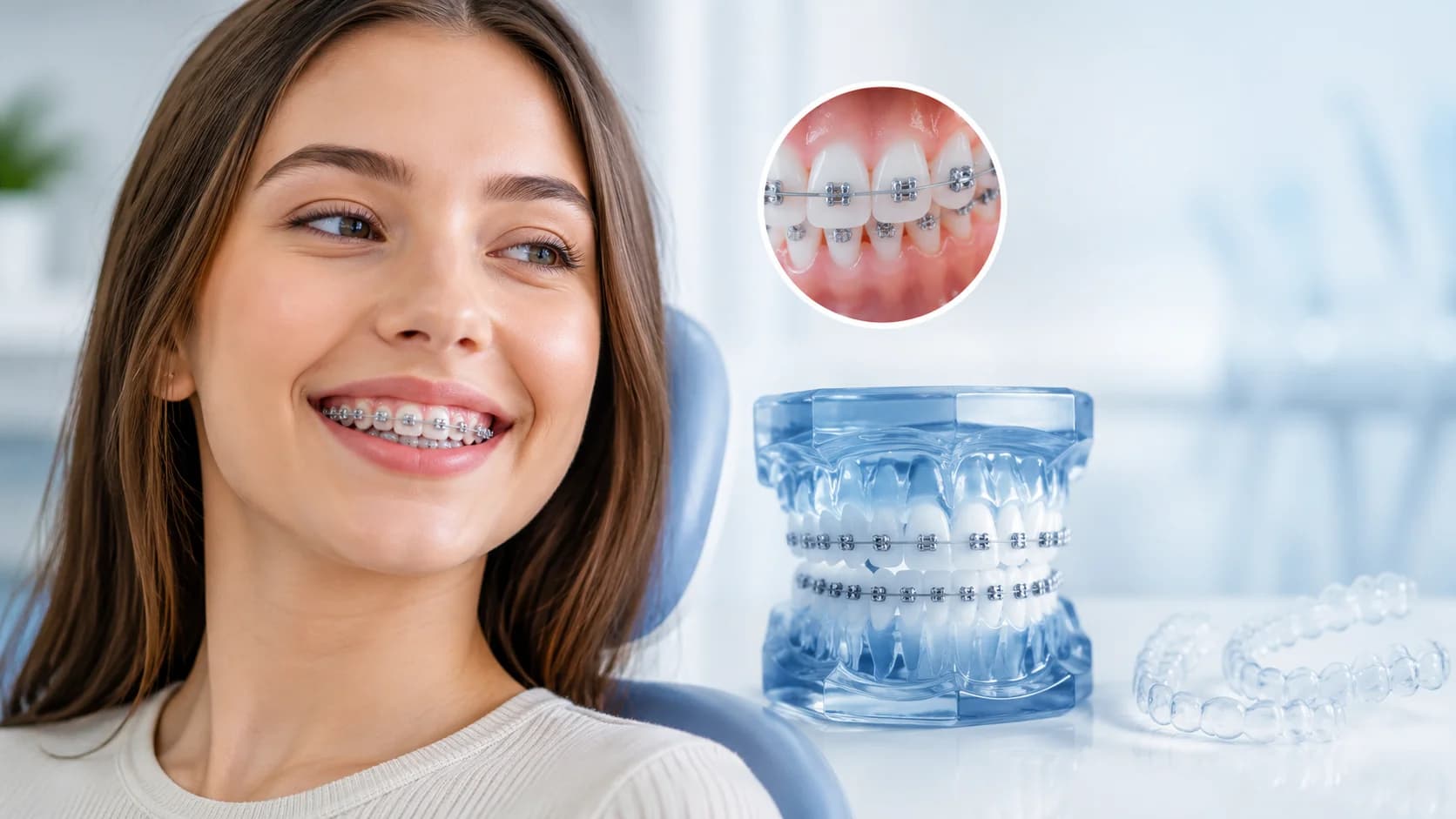
Crowded, spaced or misaligned teeth are not only an aesthetic concern. Tooth position and the relationship between the upper and lower jaws can also influence chewing, oral hygiene, speech and overall bite balance. Orthodontics is the field of dentistry that evaluates tooth alignment and jaw relationships and aims to create a more functional and balanced bite.
At Medilife Dent Oral and Dental Health Polyclinic, orthodontic assessment is planned according to the patient's age, tooth alignment, jaw structure, bite relationship, oral health and treatment expectations.
At our clinic in Beylikdüzü, orthodontic planning may include a clinical examination, photographs, digital scans and radiographic records when indicated. These records help determine whether fixed braces, clear aligners or another orthodontic approach may be appropriate.
What Is Orthodontics?
Orthodontics is the branch of dentistry concerned with tooth alignment, jaw relationships and bite problems. The goals of orthodontic treatment may include:
- Improving tooth alignment
- Supporting oral hygiene
- Improving bite balance
- Reducing irregular tooth contacts
- Improving smile appearance
- Supporting chewing function
No two orthodontic cases are identical, so treatment should be planned individually.
When Might Orthodontic Treatment Be Needed?
Orthodontic assessment may be helpful when there are:
- Crowded teeth
- Gaps between teeth
- Protruding teeth
- Overbite
- Underbite
- Open bite
- Crossbite
- Impacted teeth
- Early loss of baby teeth
- Rotated teeth
- Eruption problems
Some problems mainly involve tooth position, while others are related to jaw development.
Why Do Teeth Become Crowded?
Crowding can develop when there is not enough space in the jaw for the teeth to align properly. Possible factors include:
- Genetics
- Small jaw size
- Relatively large teeth
- Early loss of primary teeth
- Eruption problems
- Long-term oral habits
- Impacted teeth
The degree of crowding affects treatment planning.
What Is Assessed During an Orthodontic Examination?
An orthodontic examination looks at much more than the front view of the smile. The dentist may assess:
- Upper and lower tooth alignment
- Bite relationship
- Jaw growth
- Tooth eruption
- Space availability
- Dental midlines
- Facial profile
- Gum health
- Oral hygiene
Additional records may be used when necessary.
How Is Orthodontic Treatment Planned?
1. Clinical Examination
The teeth, bite and jaws are assessed.
2. Diagnostic Records
These may include:
3. Selecting the Treatment Approach
Fixed braces, clear aligners or another approach may be considered.
4. Starting Treatment
Brackets may be placed or aligners may be prepared.
5. Regular Reviews
Progress is monitored and appliances are adjusted.
6. Retention
After active treatment, retainers may be used to help maintain the new tooth positions.
What Are Dental Braces?
Braces use brackets attached to the teeth and orthodontic wires to apply controlled forces. Over time, these forces guide teeth toward planned positions. Adjustments are carried out during regular follow-up appointments.
Metal Braces
Metal braces are one of the most established orthodontic systems. They may be suitable for a wide range of cases. Potential advantages include:
- Strong control of tooth movement
- Suitability for many types of malocclusion
- Durability
Their appearance is more noticeable than less visible systems.
Ceramic or Aesthetic Braces
Ceramic brackets are designed to blend more closely with natural tooth colour. They may be considered by patients who want a less noticeable fixed appliance. Suitability depends on the individual case.
What Are Clear Aligners?
Clear aligners are removable orthodontic appliances made specifically for the patient's teeth. Patients wear a sequence of aligners, with each stage designed to move the teeth gradually toward the planned position. They are usually less visible than conventional braces.
Who Is Suitable for Clear Aligners?
Clear aligners are not suitable for every orthodontic problem. Assessment includes:
- Degree of crowding
- Tooth rotation
- Bite problem
- Jaw relationship
- Required tooth movements
- Patient compliance
More complex cases may require fixed orthodontic treatment.
Braces or Clear Aligners?
Both methods have strengths and limitations.
Fixed braces
Can provide strong control for complex tooth movements and are less dependent on patient wear time.
Clear aligners
Are removable, less visible and can make brushing and eating easier. However, successful treatment requires consistent daily wear. The most appropriate system depends on the diagnosis.
How Long Does Orthodontic Treatment Take?
Treatment length varies from patient to patient. Factors include:
- Severity of crowding
- Bite problem
- Jaw growth
- Treatment system
- Biological tooth movement
- Appointment attendance
- Clear aligner compliance
- Oral hygiene
Some cases are relatively short, while more complex treatment can take longer.
Is There an Age Limit for Orthodontics?
Orthodontic treatment is not limited to children. Adults with healthy teeth and gums can also receive orthodontic treatment. However, some jaw-growth-related problems are easier to manage during childhood or adolescence. Early assessment can therefore be useful in selected patients.
Orthodontic Assessment for Children
In children, orthodontic assessment may include:
- Permanent tooth eruption
- Space problems
- Jaw growth
- Crossbite
- Open bite
- Thumb-sucking habits
- Early loss of baby teeth
Not every child needs immediate treatment.
Sometimes monitoring growth and eruption is the most appropriate approach.
Orthodontics for Adults
Adults can seek orthodontic treatment for:
- Crowding
- Spacing
- Bite problems
- Smile concerns
- Preparation for implants or restorative work
- Gum health
- Crowns
- Fillings
- Missing teeth
- Bone support
- Planned implants
Adult treatment planning may need to consider:
Do I Need a Dental Cleaning Before Orthodontics?
Good oral hygiene is important before and during orthodontic treatment. If there is:
- Gum inflammation
- Dental calculus
- Active decay
these problems may need to be managed first.
Does Getting Braces Hurt?
Placing the brackets is generally not painful. After braces are fitted or adjusted, patients may experience:
- Pressure
- Mild soreness
- Tenderness when chewing
This is usually temporary.
Do Clear Aligners Hurt?
A new set of aligners may produce pressure or temporary tenderness as the teeth begin to move. Persistent or severe discomfort should be reviewed.
Oral Hygiene with Braces
Brackets can trap plaque and food more easily. Patients may need:
- Careful brushing
- Interdental brushes
- Floss or specialist flossing aids
- Regular dental check-ups
- Gum inflammation
- White spot lesions
- Dental decay
Poor hygiene can increase the risk of:
Oral Hygiene with Clear Aligners
Aligners are removable, so teeth can be brushed normally. The aligners also need regular cleaning. Very hot water should be avoided because it may distort the material.
What Foods Should Be Avoided with Braces?
Very hard and sticky foods may damage brackets or wires. Examples include:
- Hard sweets
- Ice
- Very hard nuts
- Sticky caramel
- Foods bitten directly with excessive force
Hard foods can often be cut into smaller pieces.
Can You Eat with Clear Aligners?
Clear aligners are generally removed for meals. Drinking sugary or strongly coloured beverages while wearing aligners may increase staining and expose teeth to sugar. Water is usually the safest drink while aligners are in place.
What Is a Retainer?
After orthodontic treatment, teeth need time to stabilise in their new positions. Retainers help maintain the result. Types include:
- Fixed retainers
- Removable clear retainers
Retention length varies from patient to patient.
Can Teeth Move Again After Orthodontics?
Yes. Teeth can naturally shift over time. Not wearing retainers as instructed may increase the risk of relapse. Retention is therefore an important part of orthodontic care.
Tooth Extraction and Orthodontics
Some patients do not have enough space for all teeth to align. In selected cases, extraction may be considered to create space. However, not every crowded case requires tooth removal. The decision depends on:
- Jaw size
- Tooth size
- Facial profile
- Amount of crowding
- Bite relationship
Impacted Teeth and Orthodontics
Some permanent teeth fail to erupt normally and remain partly or completely under the gum or bone. Canine teeth are a common example. Selected cases may involve combined surgical exposure and orthodontic movement.
Orthodontics and Jaw Surgery
Severe skeletal bite problems may not be fully corrected with tooth movement alone. In adults with significant jaw imbalance, orthodontics may be combined with orthognathic surgery. This requires detailed multidisciplinary planning.
Orthodontics and Dental Implants
Patients with missing teeth may benefit from combined orthodontic and implant planning. Orthodontics can sometimes:
- Create ideal implant space
- Close unwanted spaces
- Improve tooth position before implant placement
Because implants do not move like natural teeth, treatment sequencing is important.
Orthodontics and Smile Design
Orthodontics can be an important part of a broader smile design plan. Correcting tooth position may allow:
- More conservative cosmetic treatment
- Better symmetry
- Improved gum relationships
- A more balanced smile line
Orthodontics in Beylikdüzü
At Medilife Dent Oral and Dental Health Polyclinic, orthodontic assessment considers tooth alignment, bite and jaw development together. Children, teenagers and adults visiting from Beylikdüzü, Yakuplu, Adnan Kahveci, Güzelyurt, Barış Mahallesi, Esenyurt, Avcılar, Büyükçekmece and nearby areas can be evaluated for crowding, spacing, bite problems, braces or clear aligner treatment. Following examination and any necessary records, an individual orthodontic plan can be prepared.
Orthodontics — Quick Info Table
| Topic | Brief Info |
|---|---|
| When can it be considered? | It may be considered for crowding, spacing, rotated teeth, upper–lower bite problems and tooth position irregularities. |
| Is it only for children? | No. Orthodontic treatment may also be planned for adults when teeth and supporting tissues are suitable. |
| What treatment options exist? | Fixed metal braces, aesthetic braces and, in suitable cases, clear aligner systems may be used. |
| What is assessed before treatment? | Tooth alignment, bite relationship, jaw structure, gum health and, when needed, radiographic records are evaluated. |
| How long does treatment take? | It varies according to case complexity, the method used and the patient's compliance with treatment. |
| Is orthodontic treatment painful? | Pressure and sensitivity may be felt for a few days after initial placement or adjustment visits. |
| May tooth extraction be needed? | Not in every patient. In some cases extraction may be planned depending on space and bite characteristics. |
| Is oral care harder with braces? | Brackets can increase plaque and food accumulation, so more careful brushing and interdental cleaning are needed. |
| Can you eat with clear aligners? | Aligners are usually removed during meals and teeth are cleaned before they are put back in. |
| How long should aligners be worn each day? | Wear time is planned individually; following the daily wear schedule recommended by your dentist is important for success. |
| Does orthodontics require cutting teeth? | Generally no. Treatment is mainly based on controlled movement of the teeth. |
| Can orthodontics be done with gum disease? | If active periodontal disease is present, gum health may need to be stabilised first. |
| Can teeth shift again after treatment? | Yes. Teeth can move over time, so wearing retainers after treatment is important. |
| What is a retainer? | A fixed or removable appliance that helps maintain tooth positions after orthodontic treatment. |
| Can adults achieve good results? | Yes. Age alone is not a barrier; the suitability of teeth, bone and periodontal condition matters more. |
Difference Between Braces and Clear Aligners
| Feature | Braces | Clear Aligners |
|---|---|---|
| Visibility | More noticeable with metal brackets | Less visible |
| Can they be removed? | No, fixed to the teeth throughout treatment | Yes, can be removed and replaced by the patient |
| Patient compliance | Always on the teeth, so the patient does not control wear time | Success depends on following the recommended daily wear schedule |
| During meals | Food is eaten with brackets; hard and sticky foods should be avoided | Aligners are usually removed |
| Oral hygiene | Cleaning around brackets requires more attention | Teeth may be easier to clean because aligners can be removed |
| Cases that can be treated | Wide range from simple to more complex orthodontic problems | Suitability depends on case type and planned tooth movements |
| Follow-up process | Brackets and wires are checked and adjusted regularly | New aligners are provided at intervals and progress is monitored |
| Sensitivity in early days | Sensitivity may occur due to bracket and wire pressure | Pressure and sensitivity may occur when switching to a new aligner |
| Soft-tissue irritation | Brackets and wires may irritate cheeks or lips | Generally smoother, though edge-related sensitivity is possible |
| Breakage/loss risk | Brackets or wires may break | Aligners may be lost or damaged when removed |
| Aesthetic advantage | Visibility can be reduced with aesthetic brackets | Usually more advantageous in terms of visibility |
| Which is more suitable? | Chosen according to the orthodontic needs of the case | Chosen according to case suitability and the patient's consistent wear habits |
Frequently Asked Questions About Orthodontics
Explore a Personalised Orthodontic Approach
If you are concerned about crowding, spacing or bite problems, a detailed orthodontic assessment can determine the most appropriate treatment options. To learn more about braces and clear aligners in Beylikdüzü, you can contact Medilife Dent Oral and Dental Health Polyclinic. ---
ARTICLES
More articles
Other guides on oral and dental health you may want to read next.
 Oral Health
Root Canal Treatment: A Modern Way to Save a Natural Tooth
Learn how root canal treatment works, when it may be needed, what recovery looks like, and how proper restoration and aftercare help protect the tooth.
Read article Teeth Whitening
Teeth Whitening Methods: In-Office and At-Home Whitening Guide
Learn about in-office and at-home teeth whitening, treatment steps, differences between methods, longevity, sensitivity, and aftercare.
Read article Orthodontics
Clear Aligners vs Braces: Which Is More Suitable for You?
Clear aligners or braces? Compare both orthodontic treatments in terms of appearance, comfort, oral hygiene, treatment process, and suitability.
Read article Implant
What Is a Dental Implant? How Does Implant Treatment Work?
Learn what a dental implant is, how implant treatment works, how long it takes, who it is suitable for, and what to expect during recovery.
Read articleOral HealthRoot Canal Treatment: A Modern Way to Save a Natural Tooth
Learn how root canal treatment works, when it may be needed, what recovery looks like, and how proper restoration and aftercare help protect the tooth.
Read articleTeeth WhiteningTeeth Whitening Methods: In-Office and At-Home Whitening Guide
Learn about in-office and at-home teeth whitening, treatment steps, differences between methods, longevity, sensitivity, and aftercare.
Read articleOrthodonticsClear Aligners vs Braces: Which Is More Suitable for You?
Clear aligners or braces? Compare both orthodontic treatments in terms of appearance, comfort, oral hygiene, treatment process, and suitability.
Read articleImplantWhat Is a Dental Implant? How Does Implant Treatment Work?
Learn what a dental implant is, how implant treatment works, how long it takes, who it is suitable for, and what to expect during recovery.
Read articlePATIENT STORIES
What Do Our Patients Say?

Trustindex verified badge is the Universal Symbol of Trust. Only the greatest companies can get the verified badge with a review score above 4.5, based on customer reviews over the past 12 months. About the Trustindex verified badge
Zeynep Karaca
2 weeks ago
I went for a check-up and cleaning. They explained what would be done beforehand and briefly noted what I should watch for afterward.

Emre T.
3 weeks ago
I came for a chip on my front tooth. The color match was more natural than I expected and the procedure took less time than I thought.
Gizem Nur
1 month ago
At the first examination they listened without rushing. Price, timeline and alternatives were discussed openly, which made deciding easier.
Levent B.
2 months ago
I had consulted several places for an implant. Planning here was clearer; they walked me through the entire process on the scan.

Seda U.
3 months ago
I was worried whitening would look too artificial. The result was clean and natural, and sensitivity passed quickly.
Mohammad Asif N...
4 months ago
One of the best services I've received. Our dentist explained the treatment very clearly and made me feel confident at every step. I was seen on time and post-exam care instructions were shared as well.
Barış Yalçın
4 months ago
My follow-up appointment went very smoothly. My dentist explained the planned procedures clearly and the team stayed attentive throughout.
Katie S
4 months ago
I was relieved to find Medilife Dent for an urgent dental issue. I was anxious but the team was very helpful. They explained everything in plain language before treatment and I felt safe throughout.
kadir erol
5 months ago
I visited the clinic and had a good experience. I was nervous at first but the process was very comfortable. Cleanliness, communication and the doctor's approach exceeded my expectations.
Elif A.
6 months ago
During my smile design journey every option was explained calmly and clearly. I'm very happy with the result. They listened to my feedback at the trial stage and paid attention to small details.
Mert Yılmaz
7 months ago
I was worried before implant treatment but planning, communication and follow-up were very professional. They called after surgery to check on me, which built trust.
Ayşe Demir
7 months ago
My cleaning and check-up appointment was very comfortable. The clinic is well organized, the team is attentive and explanations were easy to understand.

Burak K.
8 months ago
I went for root canal treatment. Pain was controlled quickly and they followed up with a call afterward. I expected a long process but appointments were well planned.
Selin T.
8 months ago
At my orthodontics consultation the full process, timeline and payment options were shared clearly. I felt safe.

Can Öztürk
9 months ago
I appreciated that they kept appointment times and gave detailed information. I recommend them.
Derya K.
9 months ago
We chose them for my child's first dental visit. The team was very patient, gave time to ease fear and the check-up went smoothly.
Ahmet Şahin
10 months ago
I was very satisfied with both aesthetics and comfort for my filling. Color match was natural and I had no sensitivity afterward.
Neslihan P.
10 months ago
I went for teeth whitening. The result wasn't exaggerated — it looked natural and clean. Home care instructions were explained in detail.
Okan R.
11 months ago
I applied for a gum issue. The examination was thorough and the treatment plan was explained step by step.
Funda E.
11 months ago
Everyone at the clinic is very attentive. Pre-appointment guidance, explanations during treatment and follow-up were truly professional.