
TREATMENTS
Gum Disease and Periodontal Treatment
What is gum disease and how does gingivitis differ from periodontitis? How is bleeding treated, how does deep cleaning work and how does gum care progress?
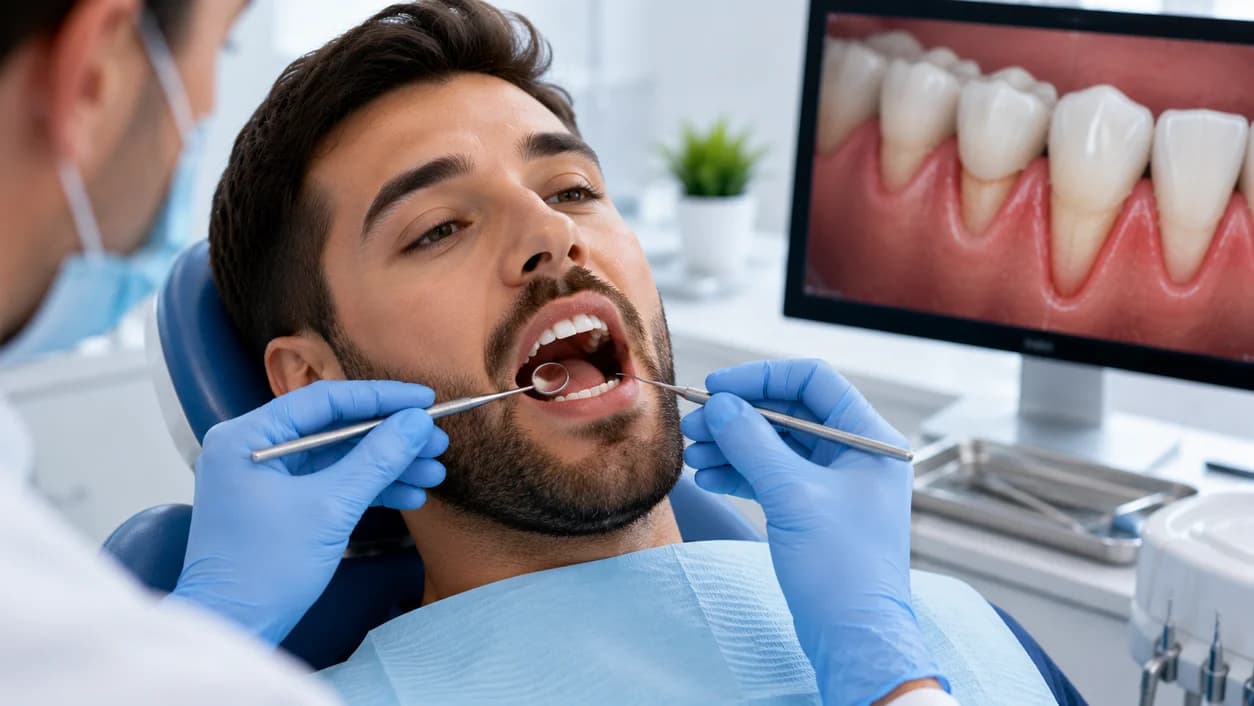
Healthy gums are essential not only for appearance but also for supporting the teeth. Bleeding, swelling, redness, bad breath, gum recession or loose teeth may indicate that the periodontal tissues need professional assessment.
Gum disease can begin as gingivitis, where inflammation is limited to the gum tissue. In some patients, untreated disease may progress to periodontitis, where the bone and supporting structures around the teeth become affected.
At Medilife Dent Oral and Dental Health Polyclinic, periodontal assessment can include gum appearance, bleeding, calculus, periodontal pocket depth, tooth mobility and bone levels when radiographs are required.
At our clinic in Beylikdüzü, treatment is planned according to disease severity and the patient's oral hygiene. The aim is to control inflammation and support long-term health of the tissues surrounding the teeth.
What Is Gum Disease?
Gum disease refers to inflammatory conditions affecting the tissues around the teeth.
Early disease may involve only the gums.
More advanced disease can affect:
- Periodontal ligament
- Supporting bone
- Root surfaces
As disease progresses, pockets may deepen and teeth may become less stable.
What Is Gingivitis?
Gingivitis is the early stage of gum disease.
Common signs include:
- Bleeding gums
- Redness
- Swelling
- Tenderness
- Bad breath
At this stage, irreversible bone loss may not yet be present.
Early treatment is therefore important.
What Is Periodontitis?
Periodontitis develops when inflammation extends deeper into the supporting structures.
It may cause:
- Deep periodontal pockets
- Bone loss
- Gum recession
- Root exposure
- Loose teeth
If uncontrolled, periodontitis can eventually contribute to tooth loss.
Signs and Symptoms of Gum Disease
Possible signs include:
- Bleeding during brushing
- Spontaneous bleeding
- Red or swollen gums
- Persistent bad breath
- Gum recession
- Teeth appearing longer
- New gaps between teeth
- Tooth mobility
- Tenderness when chewing
- Pus or drainage at the gum line
Some forms of periodontal disease can progress with little or no pain.
Why Do Gums Bleed?
Bleeding is often associated with plaque-induced inflammation.
Other factors can include:
- Aggressive brushing
- Starting flossing after a long period
- Calculus
- Periodontal disease
- Hormonal changes
- Certain systemic conditions
- Some medications
Repeated bleeding should be evaluated.
What Is Gum Recession?
Gum recession occurs when the gum margin moves away from its previous position, exposing more of the tooth root.
Possible contributing factors include:
- Periodontal disease
- Aggressive brushing
- Thin gum tissue
- Tooth position
- Traumatic bite
- Smoking
- Bruxism
Can Gum Recession Be Treated?
Treatment depends on the cause.
Options may include:
- Improving brushing technique
- Periodontal treatment
- Sensitivity management
- Monitoring
- Gum graft surgery in selected cases
Not every recession requires surgery.
Calculus and Gum Disease
Calculus is mineralised dental plaque attached to tooth surfaces.
Its rough surface can make further plaque accumulation easier.
Calculus is commonly associated with:
- Gingival inflammation
- Bleeding
- Bad breath
- Periodontal pocket formation
Professional scaling is therefore an important part of periodontal care.
How Is Gum Disease Diagnosed?
Diagnosis involves more than visual inspection.
Assessment may include:
- Bleeding
- Pocket depth
- Gum recession
- Tooth mobility
- Calculus
- Furcation areas
Radiographs may be used to assess bone levels.
What Is a Periodontal Pocket?
In health, there is a shallow natural space between the gum and tooth.
In periodontal disease, this space can become deeper.
Deep pockets may:
- Trap more plaque
- Be difficult to clean
- Support progression of infection
Pocket depth is an important periodontal measurement.
How Is Gum Disease Treated?
Treatment depends on severity.
1. Oral Hygiene Instruction
Brushing and interdental cleaning techniques are reviewed.
2. Scaling
Calculus and plaque are removed from tooth surfaces.
3. Root Surface Cleaning
Deeper root surfaces may be cleaned in more advanced disease.
4. Re-Evaluation
Healing and pocket depth are assessed after treatment.
5. Periodontal Surgery
Surgery may be considered for persistent deep pockets, bone defects or gum problems.
Does Professional Scaling Damage Teeth?
Professional scaling is designed to remove calculus, not tooth enamel.
After heavy calculus is removed, spaces that were previously filled by deposits may become more noticeable.
This does not mean the teeth have been damaged.
Is Sensitivity Normal After Scaling?
Temporary sensitivity can occur, especially in patients with heavy calculus or gum recession.
Possible symptoms include:
- Cold sensitivity
- Gum tenderness
- Root sensitivity
What Is Deep Cleaning?
Deep cleaning generally refers to cleaning below the gum line and smoothing contaminated root surfaces.
The aim is to reduce bacterial deposits and support periodontal healing.
Scaling vs Root Planing
Routine scaling focuses mainly on visible calculus.
Root surface cleaning targets deeper areas below the gum.
The required procedure depends on periodontal findings.
Does Gum Disease Hurt?
Not always.
Chronic periodontitis can progress silently.
Absence of pain does not mean the gums are healthy.
Can Gum Disease Cause Bad Breath?
Yes.
Plaque, calculus and periodontal infection can contribute to persistent bad breath.
However, halitosis can have other causes as well.
Can Periodontitis Make Teeth Loose?
Yes.
When supporting bone is lost, teeth may become mobile.
This is a sign that requires periodontal assessment.
Can Gum Disease Cause Tooth Loss?
Advanced untreated periodontitis can increase the risk of tooth loss.
Early diagnosis and regular periodontal care can help reduce this risk.
How Does Smoking Affect Gum Disease?
Smoking can:
- Increase periodontal disease risk
- Affect healing
- Reduce treatment response
Smokers may also show less visible bleeding, which can mask disease.
Diabetes and Gum Disease
Diabetes and periodontitis can influence each other.
Poorly controlled blood glucose may increase periodontal risk and severity.
Patients with diabetes benefit from regular periodontal monitoring.
Bleeding Gums During Pregnancy
Hormonal changes during pregnancy can make gums more sensitive to plaque.
Some patients notice increased:
- Bleeding
- Swelling
- Tenderness
Good oral hygiene and regular dental care remain important.
Gum Disease and General Health
Research has identified associations between periodontal disease and several systemic conditions.
However, association does not always mean direct causation.
Oral health should still be considered an important part of overall health.
Can Gum Recession Cause Sensitivity?
Yes.
Exposed root surfaces can become sensitive to:
- Cold
- Heat
- Sweet foods
Treatment depends on the severity and cause.
Gum Graft Surgery
Gum grafting may be considered in selected recession cases.
Possible goals include:
- Covering exposed roots
- Increasing gum thickness
- Reducing sensitivity
- Improving appearance
Not every patient is suitable.
What Is a Gum Graft?
A gum graft is a periodontal surgical procedure designed to add or reposition soft tissue in areas where gum tissue is deficient.
The specific technique depends on the type of recession.
What Is Periodontal Surgery?
Periodontal surgery may be used to:
- Access deep pockets
- Clean root surfaces
- Treat selected bone defects
- Correct soft tissue problems
Can Lost Bone Be Regenerated?
Not every type of bone loss can be regenerated.
Selected periodontal defects may be suitable for regenerative procedures.
Success depends on defect shape, disease control, oral hygiene and smoking status.
Can Gum Disease Come Back?
Yes.
Periodontal disease can have a chronic tendency.
Long-term control depends on:
- Daily plaque removal
- Professional maintenance
- Regular reviews
What Is Periodontal Maintenance?
Periodontal maintenance is an ongoing programme after active treatment.
It may include professional cleaning and monitoring at intervals based on the patient's risk.
Which Toothbrush Is Best for Gum Disease?
A soft or medium toothbrush may be appropriate for many patients.
Technique is usually more important than firmness.
Can I Use an Electric Toothbrush?
Yes.
Electric toothbrushes can be useful when used correctly.
Pressure sensors may help patients who brush too aggressively.
Floss and Interdental Brushes
A toothbrush cannot clean every space between teeth.
Floss and interdental brushes can therefore be important for periodontal health.
Does Mouthwash Cure Gum Disease?
No.
Mouthwash alone does not treat periodontal disease.
Some antiseptic mouthwashes may be recommended for limited periods, but mechanical plaque removal remains essential.
Gum Disease and Orthodontics
Active periodontal disease should generally be controlled before orthodontic treatment.
Moving teeth through unhealthy supporting tissues can increase risk.
Gum Disease Around Dental Implants
Inflammatory problems can also occur around implants.
These conditions are called peri-implant mucositis and peri-implantitis.
Early assessment is important.
Gum Health and Smile Aesthetics
Healthy, symmetrical gums are an important part of smile aesthetics.
Periodontal health should be stabilised before elective cosmetic restorations.
Gum Disease Treatment in Beylikdüzü
At Medilife Dent Oral and Dental Health Polyclinic, gum disease is assessed by considering bleeding, calculus, recession, pocket depths and bone support.
Patients visiting from Beylikdüzü, Yakuplu, Adnan Kahveci, Güzelyurt, Barış Mahallesi, Esenyurt, Avcılar, Büyükçekmece and nearby areas can be evaluated for gingivitis, periodontitis, gum recession and periodontal maintenance.
Treatment is planned according to disease stage and individual risk.
Gum Disease — Quick Information
| Topic | Summary |
|---|---|
| What are the most common signs? | Bleeding gums, redness, swelling, bad breath, gum recession and, in advanced cases, tooth mobility may occur. |
| Is gum bleeding normal? | Repeated bleeding is not considered normal and should be assessed for gum health. |
| What is gingivitis? | It is the early stage of gum disease and may present with redness, swelling and bleeding of the gums. |
| What is periodontitis? | It is a condition in which inflammation progresses to deeper supporting tissues, with possible bone loss and periodontal pockets. |
| What causes gum recession? | Periodontal disease, aggressive brushing, thin gum tissue, tooth position, smoking or traumatic bite may contribute. |
| Is it linked to bad breath? | Yes. Plaque, calculus and periodontal infection may contribute to halitosis. |
| Does calculus affect the disease? | Yes. Calculus can retain bacterial plaque and worsen gum inflammation. |
| Does it cause pain? | Not always. Chronic periodontitis in particular may progress without obvious pain. |
| Can teeth become loose? | With advanced bone loss, tooth support may decrease and mobility can develop. |
| How is it assessed? | Bleeding, pocket depth, calculus, recession, tooth mobility and, when needed, bone levels are evaluated. |
| How is treatment planned? | Depending on severity, oral hygiene coaching, scaling, root surface cleaning, periodontal maintenance or surgery may be considered. |
| Can it fully resolve? | Gingivitis may be largely reversible with appropriate care. Periodontitis may require long-term follow-up as a chronic condition. |
| Can it recur? | Yes. Without consistent home care and periodontal reviews, disease may progress again. |
| Does smoking affect it? | Yes. Smoking may increase periodontal disease risk and impair healing after treatment. |
| Does gum recession cause sensitivity? | Yes. Exposed root surfaces may lead to sensitivity to cold, heat or sweet foods. |
Difference Between Gingivitis and Periodontitis
| Feature | Gingivitis | Periodontitis |
|---|---|---|
| Affected area | Mainly gum tissue | Gum tissue plus bone and other tissues supporting the tooth |
| Gum bleeding | Common | Common |
| Redness and swelling | Common | May be present |
| Periodontal pocket | Usually no deep pockets | Deep pockets may develop |
| Bone loss | Not expected | May occur |
| Gum recession | Not always present | More often associated |
| Tooth mobility | Usually absent | Possible in advanced cases |
| Reversibility | Often largely reversible with early appropriate treatment | Lost supporting tissues cannot always be fully restored |
| Treatment approach | Plaque control and professional cleaning are central in most cases | Deep cleaning, root treatment, maintenance and sometimes surgery may be needed |
| Long-term follow-up | Maintaining oral hygiene is important | Regular periodontal maintenance is especially important |
Frequently Asked Questions About Gum Disease
Protect Your Gum Health Early
Bleeding gums, persistent bad breath, gum recession or loose teeth can be signs of periodontal disease.
Early assessment can help protect the supporting tissues around your teeth.
Regular oral hygiene and professional periodontal monitoring are important for long-term gum health.
ARTICLES
More articles
Other guides on oral and dental health you may want to read next.
 Oral Health
Root Canal Treatment: A Modern Way to Save a Natural Tooth
Learn how root canal treatment works, when it may be needed, what recovery looks like, and how proper restoration and aftercare help protect the tooth.
Read article Teeth Whitening
Teeth Whitening Methods: In-Office and At-Home Whitening Guide
Learn about in-office and at-home teeth whitening, treatment steps, differences between methods, longevity, sensitivity, and aftercare.
Read article Orthodontics
Clear Aligners vs Braces: Which Is More Suitable for You?
Clear aligners or braces? Compare both orthodontic treatments in terms of appearance, comfort, oral hygiene, treatment process, and suitability.
Read article Implant
What Is a Dental Implant? How Does Implant Treatment Work?
Learn what a dental implant is, how implant treatment works, how long it takes, who it is suitable for, and what to expect during recovery.
Read articleOral HealthRoot Canal Treatment: A Modern Way to Save a Natural Tooth
Learn how root canal treatment works, when it may be needed, what recovery looks like, and how proper restoration and aftercare help protect the tooth.
Read articleTeeth WhiteningTeeth Whitening Methods: In-Office and At-Home Whitening Guide
Learn about in-office and at-home teeth whitening, treatment steps, differences between methods, longevity, sensitivity, and aftercare.
Read articleOrthodonticsClear Aligners vs Braces: Which Is More Suitable for You?
Clear aligners or braces? Compare both orthodontic treatments in terms of appearance, comfort, oral hygiene, treatment process, and suitability.
Read articleImplantWhat Is a Dental Implant? How Does Implant Treatment Work?
Learn what a dental implant is, how implant treatment works, how long it takes, who it is suitable for, and what to expect during recovery.
Read articlePATIENT STORIES
What Do Our Patients Say?

Trustindex verified badge is the Universal Symbol of Trust. Only the greatest companies can get the verified badge with a review score above 4.5, based on customer reviews over the past 12 months. About the Trustindex verified badge
Zeynep Karaca
2 weeks ago
I went for a check-up and cleaning. They explained what would be done beforehand and briefly noted what I should watch for afterward.

Emre T.
3 weeks ago
I came for a chip on my front tooth. The color match was more natural than I expected and the procedure took less time than I thought.
Gizem Nur
1 month ago
At the first examination they listened without rushing. Price, timeline and alternatives were discussed openly, which made deciding easier.
Levent B.
2 months ago
I had consulted several places for an implant. Planning here was clearer; they walked me through the entire process on the scan.

Seda U.
3 months ago
I was worried whitening would look too artificial. The result was clean and natural, and sensitivity passed quickly.
Mohammad Asif N...
4 months ago
One of the best services I've received. Our dentist explained the treatment very clearly and made me feel confident at every step. I was seen on time and post-exam care instructions were shared as well.
Barış Yalçın
4 months ago
My follow-up appointment went very smoothly. My dentist explained the planned procedures clearly and the team stayed attentive throughout.
Katie S
4 months ago
I was relieved to find Medilife Dent for an urgent dental issue. I was anxious but the team was very helpful. They explained everything in plain language before treatment and I felt safe throughout.
kadir erol
5 months ago
I visited the clinic and had a good experience. I was nervous at first but the process was very comfortable. Cleanliness, communication and the doctor's approach exceeded my expectations.
Elif A.
6 months ago
During my smile design journey every option was explained calmly and clearly. I'm very happy with the result. They listened to my feedback at the trial stage and paid attention to small details.
Mert Yılmaz
7 months ago
I was worried before implant treatment but planning, communication and follow-up were very professional. They called after surgery to check on me, which built trust.
Ayşe Demir
7 months ago
My cleaning and check-up appointment was very comfortable. The clinic is well organized, the team is attentive and explanations were easy to understand.

Burak K.
8 months ago
I went for root canal treatment. Pain was controlled quickly and they followed up with a call afterward. I expected a long process but appointments were well planned.
Selin T.
8 months ago
At my orthodontics consultation the full process, timeline and payment options were shared clearly. I felt safe.

Can Öztürk
9 months ago
I appreciated that they kept appointment times and gave detailed information. I recommend them.
Derya K.
9 months ago
We chose them for my child's first dental visit. The team was very patient, gave time to ease fear and the check-up went smoothly.
Ahmet Şahin
10 months ago
I was very satisfied with both aesthetics and comfort for my filling. Color match was natural and I had no sensitivity afterward.
Neslihan P.
10 months ago
I went for teeth whitening. The result wasn't exaggerated — it looked natural and clean. Home care instructions were explained in detail.
Okan R.
11 months ago
I applied for a gum issue. The examination was thorough and the treatment plan was explained step by step.
Funda E.
11 months ago
Everyone at the clinic is very attentive. Pre-appointment guidance, explanations during treatment and follow-up were truly professional.