
TREATMENTS
Dental Scaling and Professional Teeth Cleaning
What is dental scaling, how is it done and how often is it needed? Why does tartar form, can sensitivity occur and how does periodontal care progress?
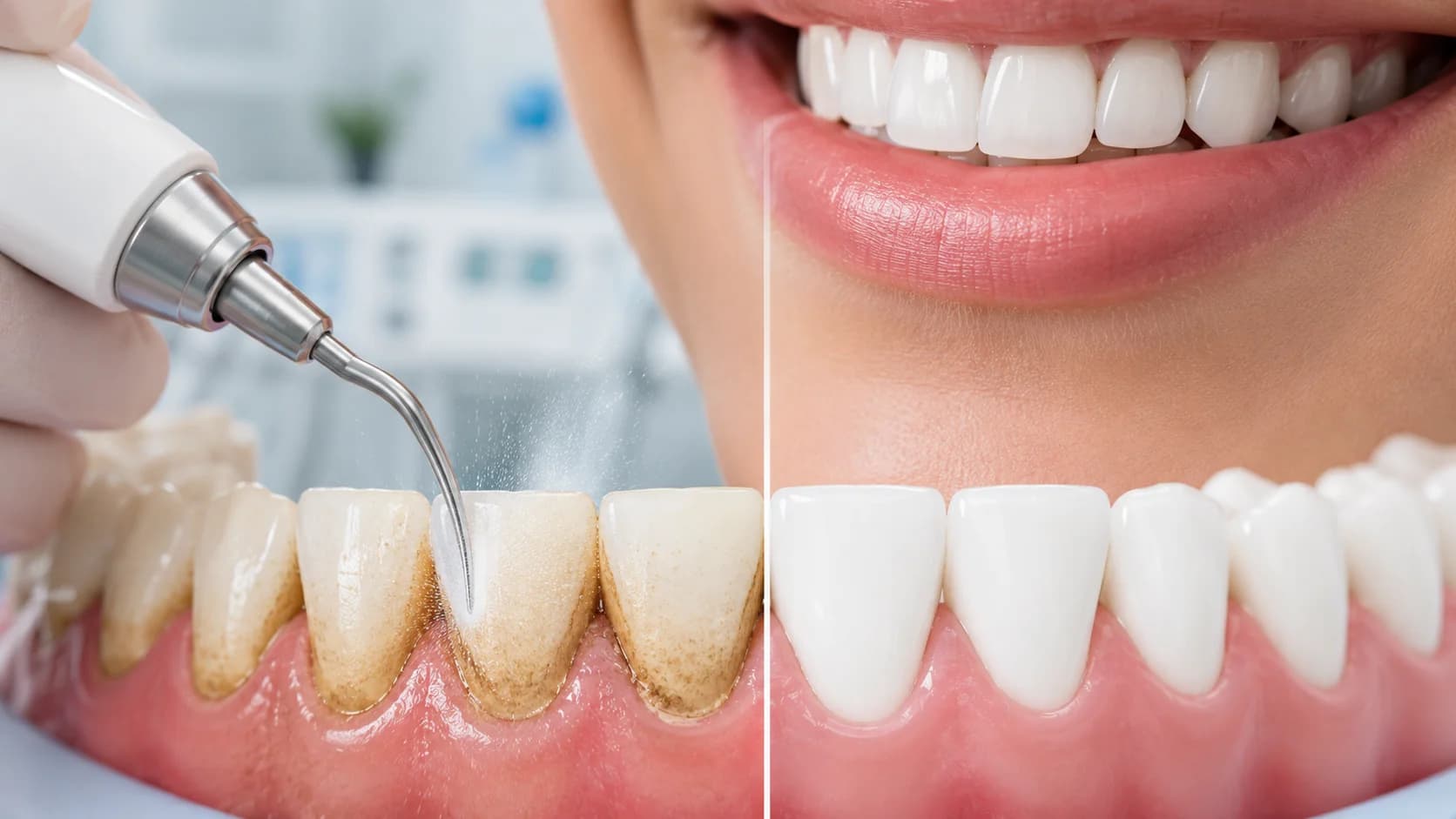
Dental plaque can gradually mineralise and harden into calculus, commonly known as tartar. Once hardened, calculus cannot be removed effectively with a normal toothbrush. It can accumulate around the gum line and below the gums, where it may contribute to gingivitis and periodontal disease.
At Medilife Dent Oral and Dental Health Polyclinic, professional scaling is planned according to more than the visible amount of tartar. Gum health, bleeding, recession, periodontal pocket depth and oral hygiene are also considered.
At our clinic in Beylikdüzü, dental scaling aims to remove hardened deposits from tooth surfaces using appropriate ultrasonic and manual instruments. Polishing and personalised oral-hygiene guidance may also be included when appropriate.
What Is Dental Calculus?
Dental calculus is mineralised plaque attached firmly to the tooth surface.
It can form:
- Along the gum line
- On the inner surfaces of lower front teeth
- On the outer surfaces of upper molars
- Between teeth
- Below the gum line
Once mineralised, it requires professional removal.
Plaque vs Tartar
Plaque is a soft bacterial biofilm.
Daily brushing and interdental cleaning can remove most plaque.
Tartar is hardened plaque that has absorbed minerals from saliva.
This makes it much more difficult to remove at home.
Why Does Tartar Form?
Factors can include:
- Inadequate brushing
- Poor interdental cleaning
- Saliva composition
- Tooth alignment
- Smoking
- Dry mouth
- Orthodontic appliances
- Dental prostheses
- Irregular professional cleaning
Some people naturally form tartar more quickly than others.
Where Does Tartar Build Up Most?
Calculus commonly forms near salivary gland openings.
Typical areas include:
- Behind the lower front teeth
- Outside the upper back teeth
However, it can develop anywhere plaque remains undisturbed.
Signs of Tartar Build-Up
Possible signs include:
- Hard yellow or brown deposits
- Bleeding gums
- Redness
- Bad breath
- Gum recession
- Rough areas between teeth
Subgingival calculus may not always be visible.
Can Tartar Cause Bleeding Gums?
Yes.
The rough surface of calculus can retain plaque and contribute to gum inflammation.
Repeated bleeding should be evaluated for periodontal disease.
Can Tartar Cause Bad Breath?
Yes, bacterial deposits associated with calculus may contribute to halitosis.
However, bad breath can have other causes such as:
- Cavities
- Tongue coating
- Dry mouth
- Gum disease
- Systemic conditions
Does Tartar Make Teeth Look Yellow?
Calculus can appear yellow, brown or dark.
Tobacco, coffee and tea can also stain calculus and tooth surfaces.
Professional cleaning can make the teeth look cleaner, but this is not the same as bleaching.
What Is Dental Scaling?
Dental scaling is professional removal of hardened plaque and calculus from tooth surfaces.
Tools may include:
- Ultrasonic scalers
- Hand instruments
- Polishing systems
The goal is to remove deposits, not tooth enamel.
How Is Dental Scaling Performed?
1. Gum and Dental Assessment
The amount of calculus and gum inflammation is evaluated.
2. Ultrasonic Scaling
Vibrating tips and water are used to break up hardened deposits.
3. Hand Instrumentation
Small hand instruments can remove remaining calculus in selected areas.
4. Polishing
Polishing may reduce surface stains and roughness.
5. Oral Hygiene Advice
Brushing and interdental cleaning techniques may be reviewed.
Does Dental Scaling Hurt?
Most patients tolerate scaling well.
Sensitivity may be greater in patients with:
- Inflamed gums
- Heavy calculus
- Gum recession
- Exposed roots
Local anaesthesia may be considered when necessary.
Is Sensitivity Normal After Scaling?
Yes.
Temporary sensitivity can occur, especially to:
- Cold drinks
- Cold air
- Touch around the gum line
It usually improves over time.
Does Scaling Damage Enamel?
Professional scaling is designed to remove calculus without intentionally removing enamel.
Patients may notice spaces between teeth after heavy calculus is removed.
These spaces were often previously filled by tartar.
Can Teeth Feel Loose After Scaling?
In advanced periodontal disease, heavy calculus can surround teeth that already have reduced bone support.
After cleaning, existing mobility may become more noticeable.
The cleaning itself does not create periodontal bone loss.
How Long Does Scaling Take?
Treatment time depends on:
- Amount of calculus
- Number of teeth
- Gum condition
- Presence of periodontal pockets
Routine scaling may be relatively quick, while advanced periodontal cleaning takes longer.
How Often Should Dental Scaling Be Done?
There is no universal interval.
Frequency depends on:
- Rate of calculus formation
- Oral hygiene
- Smoking
- Periodontal disease
- Orthodontic treatment
- Medical risk factors
Some patients may do well with six-month reviews, while periodontal patients may need more frequent maintenance.
What Can I Eat After Scaling?
A special diet is not always necessary.
If sensitivity occurs, it may help to temporarily avoid:
- Very cold foods
- Very hot drinks
- Acidic foods
- Spicy foods
Can I Drink Coffee After Scaling?
Coffee and tea can contribute to surface staining after polishing.
Good oral hygiene remains important.
Smoking After Dental Cleaning
Smoking can:
- Increase surface staining
- Contribute to calculus
- Increase periodontal disease risk
Avoiding tobacco benefits gum health.
What Is Dental Polishing?
Polishing is used to reduce certain surface stains and smooth tooth surfaces.
It is not the same as teeth whitening.
It does not change the internal natural tooth shade.
What Is Air Polishing?
Air-polishing systems use powder, water and air to remove selected surface stains and biofilm.
They can be useful for:
- Coffee stains
- Tea stains
- Tobacco staining
They are not necessary for every patient.
Scaling vs Teeth Whitening
Scaling removes:
- Plaque
- Calculus
- Some external stains
Whitening aims to lighten natural tooth colour.
These are different procedures.
Does Professional Cleaning Whiten Teeth?
Teeth can look brighter after calculus and stains are removed.
However, true shade change requires a separate whitening procedure.
How Is Calculus Below the Gum Removed?
Subgingival calculus is evaluated according to periodontal pocket depth.
Treatment may include:
- Root surface cleaning
- Deep scaling
- Local anaesthesia
What Is Deep Cleaning?
Deep cleaning generally refers to scaling and root surface debridement below the gum line.
It is used in patients with periodontal pockets or deeper calculus.
What Is Root Planing?
Root planing is cleaning and smoothing contaminated root surfaces beneath the gums.
It is usually part of periodontal treatment rather than routine prophylaxis.
Can Scaling Reverse Gum Recession?
No.
Scaling does not move receded gums back to their original position.
However, it can help control inflammation.
Why Do Gums Look Lower After Cleaning?
When swelling reduces after calculus removal, previously hidden tooth surfaces can become visible.
This may make teeth appear longer.
How Can I Reduce Tartar Formation?
Helpful measures include:
- Brushing effectively twice daily
- Cleaning between teeth
- Using floss or interdental brushes
- Regular dental reviews
- Avoiding tobacco
- Cleaning orthodontic appliances carefully
Can Floss Remove Tartar?
No.
Floss removes plaque and can help prevent new tartar formation, but it cannot remove hardened calculus.
Can an Electric Toothbrush Prevent Tartar?
It can improve plaque control.
However, it cannot remove established calculus.
Can I Remove Tartar at Home?
Trying to scrape tartar with metal instruments can damage enamel and gums.
Professional cleaning is safer.
Scaling and Gum Disease
Calculus is a major plaque-retentive factor in gingivitis and periodontitis.
Advanced periodontal disease may require more than routine scaling.
Scaling with Braces
Brackets make plaque control more difficult.
Orthodontic patients may need:
- More frequent professional cleaning
- Interdental brushes
- Orthodontic toothbrushes
Scaling Around Dental Implants
Plaque and mineralised deposits can also form around implants.
Appropriate implant-safe instruments and techniques should be used.
Dental Scaling During Pregnancy
Hormonal changes can make gums more reactive to plaque during pregnancy.
Necessary professional care can be planned according to pregnancy stage and medical status.
Is Bleeding Normal After Scaling?
Inflamed gums may bleed slightly during or shortly after treatment.
Bleeding should reduce as inflammation improves.
Will Bad Breath Improve After Cleaning?
If bad breath is mainly caused by calculus and gum inflammation, improvement may occur.
Other causes should be investigated when halitosis persists.
Gum Healing After Scaling
After removal of calculus:
- Bleeding may decrease
- Swelling may improve
- Gum colour may become healthier
Good home care is essential.
Dental Scaling in Beylikdüzü
At Medilife Dent Oral and Dental Health Polyclinic, dental scaling is planned together with assessment of gum and periodontal health.
Patients visiting from Beylikdüzü, Yakuplu, Adnan Kahveci, Güzelyurt, Barış Mahallesi, Esenyurt, Avcılar, Büyükçekmece and nearby areas can be evaluated for tartar accumulation, bleeding gums, bad breath and periodontal maintenance.
More advanced periodontal treatment may be recommended when routine scaling is not sufficient.
Dental Scaling — Quick Information
| Topic | Summary |
|---|---|
| What is dental calculus? | It is mineralized buildup formed when bacterial plaque hardens through minerals in saliva. |
| Why does it form? | Factors may include inadequate plaque removal, poor interdental cleaning, saliva composition, smoking and tooth alignment. |
| Can it be cleaned at home? | Hardened calculus cannot be fully removed with a toothbrush or floss; professional cleaning is required. |
| How is it cleaned? | It is removed from tooth surfaces using ultrasonic devices and periodontal hand instruments when needed. |
| Is the procedure painful? | Most patients do not experience significant pain. Discomfort may occur if gum recession or sensitivity is present. |
| Does it damage teeth? | With appropriate technique, professional cleaning aims to remove hardened deposits rather than abrade enamel. |
| Does it whiten teeth? | It can make teeth look cleaner by removing calculus and some surface stains, but it is not a whitening procedure. |
| Can sensitivity occur? | Temporary sensitivity may occur, especially in people with exposed root surfaces or gum recession. |
| Can it help with bad breath? | If bad breath is caused by plaque, calculus or gum inflammation, symptoms may improve after cleaning. |
| Is it linked to bleeding gums? | Yes. Bacterial plaque accumulating on calculus can contribute to gum inflammation and bleeding. |
| How long does it take? | This depends on the amount of calculus and the periodontal condition. |
| How often should it be done? | It is not the same for every patient and is determined by tartar formation rate and periodontal risk. |
| Aftercare | Regular brushing, floss or interdental brush use and scheduled dental reviews are important. |
| Who may need it more often? | Closer follow-up may be needed for fast tartar formers, smokers, orthodontic patients and those with periodontal disease. |
Difference Between Dental Scaling and Teeth Whitening
| Feature | Dental Scaling | Teeth Whitening |
|---|---|---|
| Primary goal | Remove plaque, calculus and some surface stains | Lighten the natural tooth shade |
| Removes calculus? | Yes | No |
| Reduces surface stains? | Can reduce some surface stains | Targets discoloration through a different mechanism |
| Lightens natural tooth color? | No | Yes |
| Role in gum health | Can help support periodontal health | Not a direct gum disease treatment |
| Who is it for? | Patients with plaque or calculus buildup | Patients suitable for whitening after clinical assessment |
| Can sensitivity occur? | Temporary sensitivity is possible | Temporary tooth sensitivity is possible |
| Outcome | Cleaner, smoother tooth surfaces | A lighter-looking natural tooth shade |
| Are they alternatives to each other? | No | No |
| Can both be used in the same plan? | Professional cleaning may be done first when needed | Whitening may be planned separately once oral health is suitable |
Frequently Asked Questions About Dental Scaling
Support Healthy Gums with Professional Cleaning
Tartar cannot be fully removed by normal brushing once it has hardened.
Professional scaling combined with effective home care can help reduce plaque-retentive deposits and support periodontal health.
Regular professional care combined with effective home hygiene can help reduce tartar formation and support periodontal health.
ARTICLES
More articles
Other guides on oral and dental health you may want to read next.
 Oral Health
Root Canal Treatment: A Modern Way to Save a Natural Tooth
Learn how root canal treatment works, when it may be needed, what recovery looks like, and how proper restoration and aftercare help protect the tooth.
Read article Teeth Whitening
Teeth Whitening Methods: In-Office and At-Home Whitening Guide
Learn about in-office and at-home teeth whitening, treatment steps, differences between methods, longevity, sensitivity, and aftercare.
Read article Orthodontics
Clear Aligners vs Braces: Which Is More Suitable for You?
Clear aligners or braces? Compare both orthodontic treatments in terms of appearance, comfort, oral hygiene, treatment process, and suitability.
Read article Implant
What Is a Dental Implant? How Does Implant Treatment Work?
Learn what a dental implant is, how implant treatment works, how long it takes, who it is suitable for, and what to expect during recovery.
Read articleOral HealthRoot Canal Treatment: A Modern Way to Save a Natural Tooth
Learn how root canal treatment works, when it may be needed, what recovery looks like, and how proper restoration and aftercare help protect the tooth.
Read articleTeeth WhiteningTeeth Whitening Methods: In-Office and At-Home Whitening Guide
Learn about in-office and at-home teeth whitening, treatment steps, differences between methods, longevity, sensitivity, and aftercare.
Read articleOrthodonticsClear Aligners vs Braces: Which Is More Suitable for You?
Clear aligners or braces? Compare both orthodontic treatments in terms of appearance, comfort, oral hygiene, treatment process, and suitability.
Read articleImplantWhat Is a Dental Implant? How Does Implant Treatment Work?
Learn what a dental implant is, how implant treatment works, how long it takes, who it is suitable for, and what to expect during recovery.
Read articlePATIENT STORIES
What Do Our Patients Say?

Trustindex verified badge is the Universal Symbol of Trust. Only the greatest companies can get the verified badge with a review score above 4.5, based on customer reviews over the past 12 months. About the Trustindex verified badge
Zeynep Karaca
2 weeks ago
I went for a check-up and cleaning. They explained what would be done beforehand and briefly noted what I should watch for afterward.

Emre T.
3 weeks ago
I came for a chip on my front tooth. The color match was more natural than I expected and the procedure took less time than I thought.
Gizem Nur
1 month ago
At the first examination they listened without rushing. Price, timeline and alternatives were discussed openly, which made deciding easier.
Levent B.
2 months ago
I had consulted several places for an implant. Planning here was clearer; they walked me through the entire process on the scan.

Seda U.
3 months ago
I was worried whitening would look too artificial. The result was clean and natural, and sensitivity passed quickly.
Mohammad Asif N...
4 months ago
One of the best services I've received. Our dentist explained the treatment very clearly and made me feel confident at every step. I was seen on time and post-exam care instructions were shared as well.
Barış Yalçın
4 months ago
My follow-up appointment went very smoothly. My dentist explained the planned procedures clearly and the team stayed attentive throughout.
Katie S
4 months ago
I was relieved to find Medilife Dent for an urgent dental issue. I was anxious but the team was very helpful. They explained everything in plain language before treatment and I felt safe throughout.
kadir erol
5 months ago
I visited the clinic and had a good experience. I was nervous at first but the process was very comfortable. Cleanliness, communication and the doctor's approach exceeded my expectations.
Elif A.
6 months ago
During my smile design journey every option was explained calmly and clearly. I'm very happy with the result. They listened to my feedback at the trial stage and paid attention to small details.
Mert Yılmaz
7 months ago
I was worried before implant treatment but planning, communication and follow-up were very professional. They called after surgery to check on me, which built trust.
Ayşe Demir
7 months ago
My cleaning and check-up appointment was very comfortable. The clinic is well organized, the team is attentive and explanations were easy to understand.

Burak K.
8 months ago
I went for root canal treatment. Pain was controlled quickly and they followed up with a call afterward. I expected a long process but appointments were well planned.
Selin T.
8 months ago
At my orthodontics consultation the full process, timeline and payment options were shared clearly. I felt safe.

Can Öztürk
9 months ago
I appreciated that they kept appointment times and gave detailed information. I recommend them.
Derya K.
9 months ago
We chose them for my child's first dental visit. The team was very patient, gave time to ease fear and the check-up went smoothly.
Ahmet Şahin
10 months ago
I was very satisfied with both aesthetics and comfort for my filling. Color match was natural and I had no sensitivity afterward.
Neslihan P.
10 months ago
I went for teeth whitening. The result wasn't exaggerated — it looked natural and clean. Home care instructions were explained in detail.
Okan R.
11 months ago
I applied for a gum issue. The examination was thorough and the treatment plan was explained step by step.
Funda E.
11 months ago
Everyone at the clinic is very attentive. Pre-appointment guidance, explanations during treatment and follow-up were truly professional.