
TREATMENTS
Dental Implant Treatment
Restore missing teeth with dental implants for long-term function. What is an implant, who may be suitable, and how do placement, healing and aftercare work?
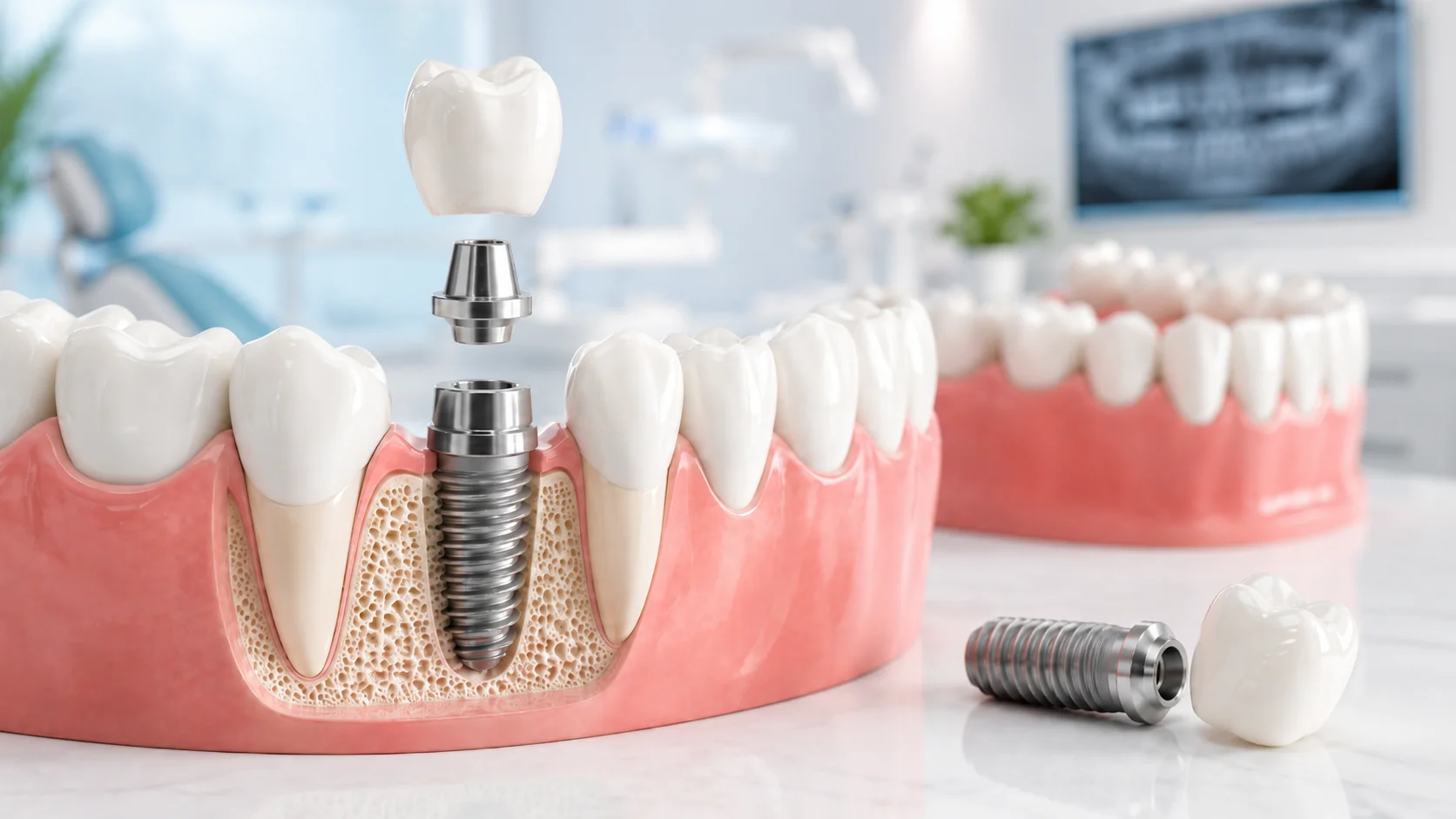
Missing teeth can affect much more than the appearance of your smile. They may influence chewing function, speech, bite balance and the position of neighbouring teeth over time. Dental implant treatment is a modern restorative approach that uses artificial tooth roots placed in the jawbone to support restorations designed to replace missing teeth.
At Medilife Dent Oral and Dental Health Polyclinic, implant treatment is planned individually according to the condition of the teeth and gums, jawbone structure, number and location of missing teeth and the patient’s overall treatment needs. At our clinic in Beylikdüzü, treatment begins with a detailed oral examination. When required, radiographic imaging is used to assess available bone and surrounding anatomical structures.
Implant dentistry is not simply about placing an implant in the jaw. Implant position, the design of the future restoration, gum levels, bite forces, aesthetics and long-term maintenance all need to be considered from the planning stage.
What Is a Dental Implant?
A dental implant is an artificial tooth root placed into the jawbone to provide support for a restoration in an area where a natural tooth has been lost. A natural tooth consists of a root and a visible crown. In implant treatment, the implant functions as the replacement root. After an appropriate healing period and integration with the surrounding bone, a connector and custom-made crown, bridge or implant-supported prosthesis can be attached.
Dental implants may be considered for a single missing tooth, several missing teeth or selected cases of complete tooth loss. The number of implants and type of restoration are determined according to the individual anatomy and treatment plan.
Who May Be Suitable for Dental Implant Treatment?
Dental implants are not automatically suitable for everyone with a missing tooth. Jawbone volume, gum health, oral hygiene, bite relationship, general health, medications, smoking habits and the presence of active dental disease should all be evaluated before treatment.
Uncontrolled medical conditions, active oral infections, severe periodontal problems or other factors that may affect healing can alter the treatment plan. Suitability should therefore be determined through a clinical examination, supported by imaging when indicated.
How Is Dental Implant Treatment Performed?
Implant treatment usually takes place in several stages. The exact sequence and overall timeline depend on the number of implants, bone conditions, the location being treated and whether additional surgical procedures are required.
1. Examination and Treatment Planning
The teeth, gums and jaw are assessed in detail. Available bone, neighbouring teeth, opposing teeth, bite, gum condition and the space required for the final restoration are reviewed. Imaging may be used when necessary to support planning.
Good implant planning considers the final crown or prosthesis from the beginning. The implant should be positioned not only where bone is available, but also where the future restoration can function and look appropriate.
2. Implant Placement
After planning, the dental implant is surgically placed into the selected area of the jaw, generally under local anaesthesia. The duration and complexity of the procedure depend on the number of implants, treatment site and any additional procedures required.
After placement, the surgical area is managed according to the treatment plan and the healing phase begins. Individual instructions are provided regarding oral hygiene, diet and follow-up appointments.
3. Healing and Osseointegration
The biological process through which the implant becomes integrated with the surrounding bone is known as osseointegration. Healing time varies between patients and can be influenced by bone quality, implant location, grafting procedures, general health and individual healing response.
Maintaining oral hygiene and attending recommended reviews are important throughout this stage.
4. Final Restoration
Once the implant has healed appropriately, the restorative stage can begin. Impressions or digital records may be taken to evaluate tooth shape, colour, bite and gum levels. The planned crown, bridge or implant-supported prosthesis is then connected to the implant.
Benefits of Dental Implant Treatment
In suitable cases, dental implants can provide stable support for replacing missing teeth. For a single missing tooth, an implant-supported crown may allow the gap to be restored without preparing neighbouring teeth for support.
Replacing missing teeth may also support chewing function, bite balance, speech and smile aesthetics. As with every treatment, implants also have limitations and maintenance requirements, so the most appropriate option should be selected after individual assessment.
Single-Tooth Dental Implants
When one tooth is missing and bone and gum conditions are suitable, a single implant and crown may be considered. The implant is placed in the missing tooth area and a custom crown is prepared after appropriate healing.
In visible areas, implant position, gum contour, symmetry with neighbouring teeth and the shade and shape of the restoration require particularly careful planning.
Implants for Multiple Missing Teeth
When several adjacent teeth are missing, it may not be necessary to place one implant for every missing tooth. Depending on the number of missing teeth, available bone and prosthetic design, an implant-supported bridge may be planned using a selected number of implants.
The number and distribution of implants are determined individually to support appropriate function and force distribution.
Implant-Supported Options for Complete Tooth Loss
For selected patients with complete tooth loss in the upper or lower jaw, implants may be used to support fixed or removable prosthetic solutions. These cases require comprehensive planning, including an assessment of bone volume, jaw relationship, existing denture use, oral hygiene ability and patient expectations.
The same implant number or prosthetic design is not suitable for every completely edentulous patient.
Why Is Jawbone Structure Important?
A dental implant requires adequate bone support. After a tooth is lost, the bone in that area can change over time. Some patients may also have limited bone height or width because of anatomy or previous dental conditions.
For this reason, bone volume and surrounding anatomical structures are assessed before implant placement. In selected cases, additional procedures intended to support bone volume may be included in the treatment plan.
Bone Grafting and Dental Implants
Bone grafting materials may be considered when the available bone is insufficient for the planned implant position. The need for grafting depends on the location of the missing tooth, existing bone, implant dimensions and the condition of surrounding tissues.
Bone grafting is not required for every implant patient. The decision is made after clinical and radiographic evaluation.
How Long Does Dental Implant Treatment Take?
There is no single treatment duration that applies to every patient. The number of implants, bone quality, need for grafting, implant location, healing response and type of final restoration all affect the timeline.
Some cases may progress more quickly, while others require a longer healing phase. A realistic treatment timeline can only be estimated after an individual examination.
Is Dental Implant Treatment Painful?
Implant placement is generally carried out under local anaesthesia to numb the treatment area. After the anaesthetic wears off, temporary tenderness, swelling or discomfort may occur around the surgical site.
The degree of postoperative discomfort varies according to the extent of surgery and individual healing response. Unexpected or increasing symptoms should be discussed with the treating dentist.
Diet and Aftercare After Implant Surgery
During the early healing period, the surgical area should be protected. Depending on the procedure, patients may be advised to avoid very hot, hard or irritating foods for a period of time. Oral hygiene should continue using the method recommended by the dentist.
Dental implants do not develop tooth decay like natural teeth, but the gum and bone around them still require regular care. Brushing, interdental cleaning and professional check-ups are essential parts of long-term implant maintenance.
Does Smoking Affect Dental Implant Treatment?
Smoking can negatively affect oral tissues, healing and the health of tissues around implants. Smoking habits should therefore be discussed during treatment planning, and patients should follow professional advice before and after surgery.
Dental Implant or Dental Bridge?
Implants and bridges are both options for replacing missing teeth. The appropriate choice depends on the condition of neighbouring teeth, number of missing teeth, available bone, bite, oral hygiene and patient expectations.
Neither option is automatically better for every patient. The benefits and limitations of each approach should be discussed after clinical assessment.
Aesthetic Planning in Implant Dentistry
Implants in the front of the mouth require detailed aesthetic as well as functional planning. Implant angle and position, gum level, soft tissue thickness, neighbouring tooth shape and the design and shade of the final crown can influence the result.
Aesthetic planning should therefore begin before implant placement rather than being left until the final restorative stage.
Why Are Regular Implant Check-Ups Important?
Placement of the final restoration does not eliminate the need for future dental care. Follow-up visits may include assessment of gum health, oral hygiene, the implant-supported restoration, bite forces and radiographic findings when appropriate.
Regular monitoring helps maintain the health of the tissues around the implant and allows potential problems to be identified earlier.
Dental Implants in Beylikdüzü
Medilife Dent Oral and Dental Health Polyclinic provides dental implant assessment and treatment planning for patients from Beylikdüzü, Yakuplu, Adnan Kahveci, Güzelyurt, Barış Mahallesi, Esenyurt, Avcılar, Büyükçekmece and nearby areas. Each patient receives an individual assessment of their teeth, gums, jawbone and restorative needs.
If you are considering dental implants in Beylikdüzü, the first step is a comprehensive dental examination. The missing tooth area, bone structure, gum health and alternative treatment options are reviewed before an individual treatment approach is recommended.
Dental Implant Treatment — Quick Info Table
| Topic | Brief Info |
|---|---|
| When can it be considered? | It may be considered for single or multiple missing teeth when jaw bone and overall oral health are suitable. |
| Who can have it? | It may be planned for adults with completed jaw development and sufficient bone support in the implant area after clinical assessment. |
| Is an implant placed for every missing tooth? | No. Bone structure, gum health, general health and other treatment options are assessed together. |
| What material are implants made from? | Most dental implants are made from titanium or titanium-based materials. |
| How is an implant placed? | Under local anaesthesia, the implant is placed in a prepared area of jaw bone and healing is monitored. |
| Is the procedure painful? | It is usually performed under local anaesthesia. Temporary pain, sensitivity or swelling may occur afterwards. |
| How long does treatment take? | It varies according to bone structure, number of implants, healing and any additional surgery. |
| Can an implant be placed immediately after extraction? | In suitable cases it may be placed in the same session; infection, bone and gum condition must be assessed. |
| Can implants be done with insufficient bone? | In some patients implants may be planned after bone grafting or other surgical methods are considered. |
| Is bone grafting needed for every patient? | No. It is considered only when existing bone volume or structure is not sufficient for the implant. |
| When is the tooth placed after implant? | Timing of the permanent prosthesis depends on implant integration with bone and the treatment plan. |
| What restoration can be placed on an implant? | Single crowns, bridges or implant-supported dentures may be used. |
| Do implants decay? | The implant itself does not decay; inflammatory problems may develop in surrounding gum and bone. |
| How are implants maintained? | Regular brushing, interdental cleaning, suitable interdental products and professional check-ups are important. |
| Does smoking affect implant treatment? | Yes. Smoking may negatively affect healing and the health of tissues around the implant. |
| How long do implants last? | A fixed lifespan cannot be given. Oral hygiene, bone and gum health, smoking, bruxism and regular check-ups may affect long-term outcome. |
Difference Between Dental Implant and Dental Bridge
| Feature | Dental Implant | Dental Bridge |
|---|---|---|
| Main purpose | To replace a missing tooth with support from an artificial root placed in jaw bone | To fill a gap mostly using support from neighbouring teeth |
| Is work needed on neighbouring teeth? | For a single implant, neighbouring teeth usually do not need to be prepared | In a conventional bridge, supporting neighbouring teeth must be prepared |
| Placed in jaw bone? | Yes | No |
| Is surgery required? | Yes, implant placement is a surgical procedure | Generally does not require surgery like implant placement |
| Treatment duration | May take longer due to bone integration | Can usually be completed in a shorter time |
| Is bone volume important? | Yes. Sufficient bone volume and quality are needed for implants | Bone volume in the gap is not equally decisive |
| Effect on bone loss | An implant may transfer functional load to bone in that area | Does not directly support bone in the missing tooth area |
| Use for single missing tooth | May allow leaving neighbouring teeth untouched | May require support from neighbouring teeth |
| Multiple missing teeth | Implant-supported bridge or denture may be planned | Conventional bridge may be made if suitable abutment teeth exist |
| Oral hygiene | Cleaning around the implant is especially important | The area under the bridge must be cleaned with special floss or interdental tools |
| Who is it suitable for? | Patients with suitable bone, gum and general health | Patients with suitable abutment teeth and oral structure |
| Which is better? | Neither is better for everyone on its own | Choice depends on bone structure, neighbouring teeth, general health and treatment plan |
Frequently Asked Questions
Learn More About Dental Implant Treatment
If you have one or more missing teeth and would like to find out whether dental implant treatment may be suitable for you, you can contact Medilife Dent Oral and Dental Health Polyclinic. Treatment decisions are made after clinical examination and, when necessary, radiographic assessment of the teeth, gums and jawbone.
---
ARTICLES
More articles
Other guides on oral and dental health you may want to read next.
 Oral Health
Root Canal Treatment: A Modern Way to Save a Natural Tooth
Learn how root canal treatment works, when it may be needed, what recovery looks like, and how proper restoration and aftercare help protect the tooth.
Read article Teeth Whitening
Teeth Whitening Methods: In-Office and At-Home Whitening Guide
Learn about in-office and at-home teeth whitening, treatment steps, differences between methods, longevity, sensitivity, and aftercare.
Read article Orthodontics
Clear Aligners vs Braces: Which Is More Suitable for You?
Clear aligners or braces? Compare both orthodontic treatments in terms of appearance, comfort, oral hygiene, treatment process, and suitability.
Read article Implant
What Is a Dental Implant? How Does Implant Treatment Work?
Learn what a dental implant is, how implant treatment works, how long it takes, who it is suitable for, and what to expect during recovery.
Read articleOral HealthRoot Canal Treatment: A Modern Way to Save a Natural Tooth
Learn how root canal treatment works, when it may be needed, what recovery looks like, and how proper restoration and aftercare help protect the tooth.
Read articleTeeth WhiteningTeeth Whitening Methods: In-Office and At-Home Whitening Guide
Learn about in-office and at-home teeth whitening, treatment steps, differences between methods, longevity, sensitivity, and aftercare.
Read articleOrthodonticsClear Aligners vs Braces: Which Is More Suitable for You?
Clear aligners or braces? Compare both orthodontic treatments in terms of appearance, comfort, oral hygiene, treatment process, and suitability.
Read articleImplantWhat Is a Dental Implant? How Does Implant Treatment Work?
Learn what a dental implant is, how implant treatment works, how long it takes, who it is suitable for, and what to expect during recovery.
Read articlePATIENT STORIES
What Do Our Patients Say?

Trustindex verified badge is the Universal Symbol of Trust. Only the greatest companies can get the verified badge with a review score above 4.5, based on customer reviews over the past 12 months. About the Trustindex verified badge
Zeynep Karaca
2 weeks ago
I went for a check-up and cleaning. They explained what would be done beforehand and briefly noted what I should watch for afterward.

Emre T.
3 weeks ago
I came for a chip on my front tooth. The color match was more natural than I expected and the procedure took less time than I thought.
Gizem Nur
1 month ago
At the first examination they listened without rushing. Price, timeline and alternatives were discussed openly, which made deciding easier.
Levent B.
2 months ago
I had consulted several places for an implant. Planning here was clearer; they walked me through the entire process on the scan.

Seda U.
3 months ago
I was worried whitening would look too artificial. The result was clean and natural, and sensitivity passed quickly.
Mohammad Asif N...
4 months ago
One of the best services I've received. Our dentist explained the treatment very clearly and made me feel confident at every step. I was seen on time and post-exam care instructions were shared as well.
Barış Yalçın
4 months ago
My follow-up appointment went very smoothly. My dentist explained the planned procedures clearly and the team stayed attentive throughout.
Katie S
4 months ago
I was relieved to find Medilife Dent for an urgent dental issue. I was anxious but the team was very helpful. They explained everything in plain language before treatment and I felt safe throughout.
kadir erol
5 months ago
I visited the clinic and had a good experience. I was nervous at first but the process was very comfortable. Cleanliness, communication and the doctor's approach exceeded my expectations.
Elif A.
6 months ago
During my smile design journey every option was explained calmly and clearly. I'm very happy with the result. They listened to my feedback at the trial stage and paid attention to small details.
Mert Yılmaz
7 months ago
I was worried before implant treatment but planning, communication and follow-up were very professional. They called after surgery to check on me, which built trust.
Ayşe Demir
7 months ago
My cleaning and check-up appointment was very comfortable. The clinic is well organized, the team is attentive and explanations were easy to understand.

Burak K.
8 months ago
I went for root canal treatment. Pain was controlled quickly and they followed up with a call afterward. I expected a long process but appointments were well planned.
Selin T.
8 months ago
At my orthodontics consultation the full process, timeline and payment options were shared clearly. I felt safe.

Can Öztürk
9 months ago
I appreciated that they kept appointment times and gave detailed information. I recommend them.
Derya K.
9 months ago
We chose them for my child's first dental visit. The team was very patient, gave time to ease fear and the check-up went smoothly.
Ahmet Şahin
10 months ago
I was very satisfied with both aesthetics and comfort for my filling. Color match was natural and I had no sensitivity afterward.
Neslihan P.
10 months ago
I went for teeth whitening. The result wasn't exaggerated — it looked natural and clean. Home care instructions were explained in detail.
Okan R.
11 months ago
I applied for a gum issue. The examination was thorough and the treatment plan was explained step by step.
Funda E.
11 months ago
Everyone at the clinic is very attentive. Pre-appointment guidance, explanations during treatment and follow-up were truly professional.